Are EPS Foam Christmas Dolls Prone to Problems With Proportions or Deformation?
Material Characteristics of EPS Foam in Decorative Products
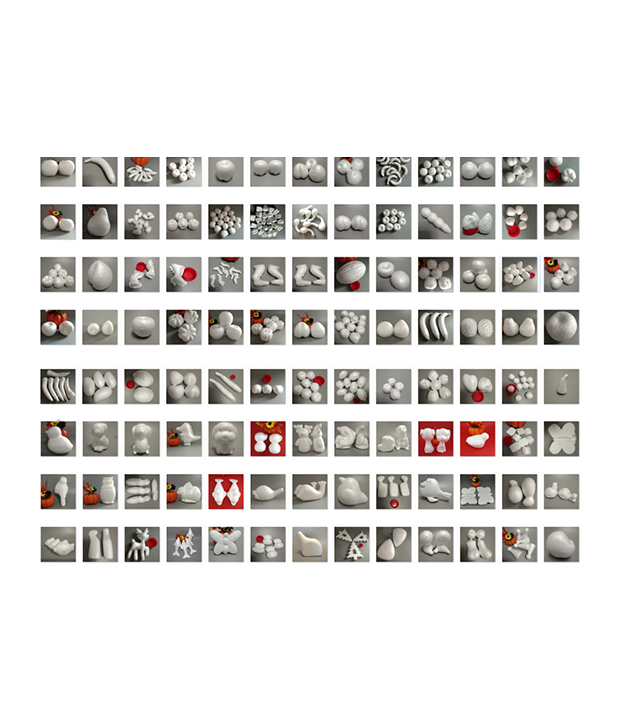
EPS foam is widely used in seasonal decorative items such as Christmas dolls due to its low density, ease of shaping, and compatibility with various surface finishes. The material is formed through the expansion and molding of foam particles, creating a lightweight structure with internal air cells. These characteristics make EPS suitable for complex shapes and large decorative volumes, but they also mean that dimensional stability depends heavily on material control and processing conditions.
The Relationship Between Mold Design and Proportional Accuracy
Proportional accuracy in EPS foam Christmas dolls begins with mold design. If the mold geometry does not fully account for particle expansion behavior and cooling shrinkage, dimensional deviations can occur. In large or detailed figures, slight inconsistencies in mold venting or wall thickness may lead to uneven expansion, which can affect facial features, body symmetry, or overall proportions.
Influence of Foam Particle Quality on Shape Stability
The quality and consistency of EPS foam particles directly influence the ability of a Christmas doll to maintain its intended shape. Particles with uneven size distribution or unstable expansion ratios may fuse irregularly during molding. This can create internal stress points that gradually relax over time, potentially leading to minor deformation in areas with thin walls or extended contours.
Thermal Conditions During Molding and Cooling
Temperature control during molding plays a significant role in preventing deformation. EPS particles must be heated sufficiently to fuse while avoiding overheating that could weaken cell walls. Uneven cooling after molding may result in internal stress differences, which can affect dimensional stability. Manufacturers with established process control systems typically manage heating and cooling cycles carefully to reduce these risks.
Post-Molding Handling and Storage Effects
Even when EPS foam Christmas dolls leave the mold with accurate proportions, improper handling or storage can contribute to deformation. Stacking heavy items on top of finished products or exposing them to elevated temperatures may cause gradual compression. Because EPS is a viscoelastic material, prolonged stress can lead to permanent shape changes, especially in unsupported areas.
| Influencing Factor |
Potential Effect on Proportions |
Common Observation |
| Uneven particle expansion |
Local size variation |
Asymmetrical details |
| Insufficient cooling control |
Internal stress retention |
Gradual deformation |
| Improper storage pressure |
Compression of foam |
Flattened surfaces |
Impact of Size and Design Complexity
Larger EPS foam Christmas dolls or those with intricate features are more sensitive to proportion and deformation issues. Extended limbs, thin decorative elements, or hollow sections require careful structural support during molding. Without proper design reinforcement, these areas may deform more easily under their own weight or during transportation.
Surface Coatings and Their Role in Dimensional Stability
Many EPS foam Christmas dolls receive surface coatings such as paint, flocking, or fabric layers. While these finishes primarily serve aesthetic purposes, they can also influence dimensional behavior. Uniform coatings may help distribute minor stresses, whereas uneven application can create localized tension that affects shape retention over time.
Environmental Exposure During Seasonal Use
Christmas decorations are often stored for extended periods and then displayed in varying environments. Exposure to sunlight, indoor heating, or outdoor temperature changes can affect EPS foam. Elevated temperatures may soften the foam slightly, increasing the likelihood of deformation if the product is under load during display.
Manufacturing Experience and Process Control
Manufacturers with long-term experience in foam product development tend to implement tighter controls over raw materials, molding parameters, and quality inspection. Yangzhou Ever-Growing International Co., Ltd., operating a large modern production base supported by an experienced technical team, emphasizes consistent processing conditions to maintain dimensional stability across decorative foam products.
| Production Stage |
Control Focus |
Impact on Final Shape |
| Raw material preparation |
Particle consistency |
Uniform expansion behavior |
| Molding process |
Temperature and pressure balance |
Accurate proportions |
| Post-molding handling |
Stress and load reduction |
Maintained dimensional stability |
Quality Inspection and Dimensional Verification
Dimensional inspection is commonly used to identify potential proportion issues before products are shipped. Visual checks combined with sample measurements help detect asymmetry or unexpected shrinkage. Early identification allows adjustments in processing parameters to reduce recurrence in subsequent production batches.
Balancing Lightweight Design and Structural Support
One of the advantages of EPS foam is its lightweight nature, which is valuable for large decorative items. However, achieving this benefit while maintaining structural integrity requires careful balance. Reinforcement techniques, optimized wall thickness, and thoughtful internal geometry can help reduce the risk of deformation without significantly increasing weight.
Understanding Practical Use Expectations
EPS foam Christmas dolls are primarily decorative rather than load-bearing items. When used within intended conditions and handled appropriately, they generally maintain their proportions during seasonal display. Awareness of material behavior, combined with appropriate manufacturing and storage practices, plays a central role in minimizing deformation-related concerns.
FAQ
Q: How does EPS foam affect the weight and handling of Christmas dolls?
A: EPS foam is lightweight by nature, which makes Christmas dolls easier to handle, transport, and install during seasonal displays. This property is especially useful for larger decorative figures that need to be moved or repositioned without heavy equipment.
Q: Can EPS foam Christmas dolls maintain their shape during long-term storage?
A: When stored under appropriate conditions without excessive stacking pressure or heat exposure, EPS foam Christmas dolls generally retain their shape. Proper packaging and controlled storage environments help reduce the risk of compression-related deformation.
Q: Are EPS foam Christmas dolls suitable for detailed decorative designs?
A: EPS foam can be molded into complex shapes, allowing for expressive designs and varied proportions. The level of detail depends on mold precision, foam particle consistency, and post-processing methods such as surface coating or finishing.
Q: How do environmental factors influence EPS foam Christmas dolls during display?
A: Temperature changes, direct sunlight, and indoor heating can affect EPS foam behavior over time. While short-term exposure is usually manageable, prolonged heat or uneven support during display may increase the chance of shape changes.
Q: What role does manufacturing experience play in dimensional stability?
A: Experienced manufacturers like Yangzhou Ever-Growing International Co., Ltd. apply controlled molding parameters and material selection to help ensure consistent proportions and reliable dimensional stability across production batches.
Q: Can EPS foam Christmas dolls be combined with other materials?
A: Yes, EPS foam Christmas dolls are often combined with fabrics, paints, or plastic components to enhance appearance and durability. These materials are selected to remain compatible with the foam structure and intended decorative use.
Q: What should be checked before using EPS foam Christmas dolls for seasonal decoration?
A: It is advisable to inspect the surface condition, overall symmetry, and any attached decorative elements. Ensuring that the product is free from visible compression or damage helps maintain its visual appearance during display.



 English
 中文简体
中文简体 Español