How Much Drop Impact or Stacking Pressure Can an EPS Packaging Box Withstand?
Understanding Mechanical Loads in EPS Packaging Applications
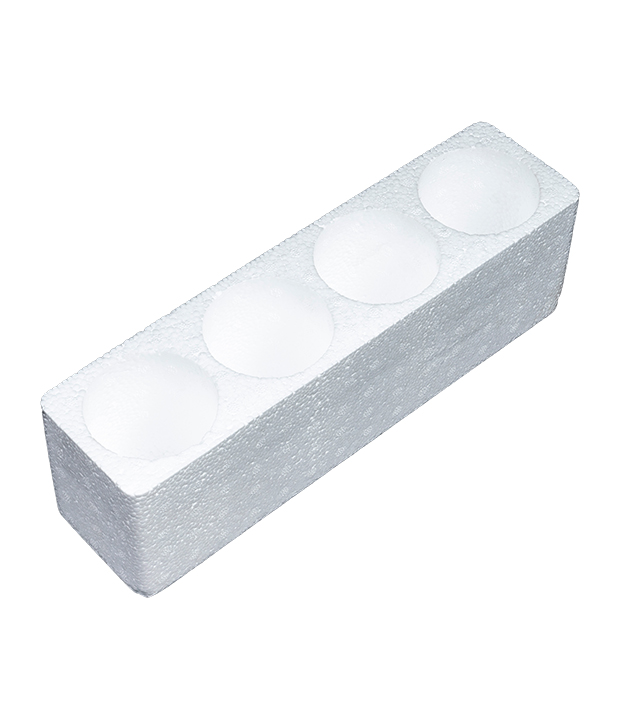
Expanded Polystyrene packaging boxes are widely used to protect products during transportation, storage, and handling. In real logistics environments, packaging is mainly exposed to two types of mechanical stress: drop impact during handling and stacking pressure during warehousing or transit. The ability of an EPS packaging box to withstand these stresses depends on multiple interacting factors, including material density, box structure, wall thickness, molding quality, and the nature of the packed product. For manufacturers such as Yangzhou Ever-Growing International Co., Ltd., which has long-term experience in foam product development, these variables are carefully controlled during design and production.
Material Density and Its Influence on Drop Impact Resistance
EPS density is one of the most influential parameters affecting drop impact performance. Density is typically expressed in kilograms per cubic meter and directly reflects the amount of polymer material within a given volume. Lower-density EPS offers lighter weight and cost efficiency but provides limited energy absorption under impact. Higher-density EPS contains more closed cells per unit volume, allowing it to absorb and dissipate impact energy more effectively when dropped.
When an EPS packaging box is dropped, the kinetic energy generated by the fall must be absorbed by controlled deformation of the foam structure. If the density is insufficient, the cell walls collapse too quickly, transferring excessive force to the product. Proper density selection allows progressive compression, reducing peak acceleration transmitted to the contents.
Drop Height, Product Weight, and Energy Absorption Behavior
The allowable drop height of an EPS packaging box cannot be evaluated independently of the packaged product’s weight. A heavier product generates higher impact energy at the same drop height. EPS packaging design therefore considers the combined system of box and contents rather than the box alone. In practical testing scenarios, common drop heights range from 300 mm to 1000 mm, simulating manual handling and conveyor operations.
EPS foam absorbs energy by collapsing its internal cell structure in stages. Initial compression absorbs low-energy impacts, while deeper compression layers engage as impact energy increases. This behavior enables EPS packaging boxes to provide cushioning across a range of drop conditions, as long as the design parameters align with the expected handling environment.
| EPS Density Range |
Typical Drop Height Tolerance |
Suitable Product Weight Range |
| 12–15 kg/m³ |
300–500 mm |
Lightweight consumer items |
| 18–22 kg/m³ |
500–800 mm |
Medium-weight appliances |
| 25–30 kg/m³ |
800–1000 mm |
Industrial or fragile equipment |
Structural Design and Its Role in Impact Performance
Beyond material density, the geometry of the EPS packaging box plays a critical role in impact resistance. Features such as corner reinforcements, ribbed walls, and localized thickening at stress points help distribute impact forces more evenly. Corners are particularly important because drops often occur on edges or corners rather than flat surfaces.
Custom-molded EPS packaging, produced using precision molds, allows designers to tailor the internal structure to the shape and center of gravity of the product. This approach reduces localized stress concentration and improves overall impact performance compared to generic box shapes.
Understanding Stacking Pressure in Warehousing and Transportation
Stacking pressure occurs when multiple packaged units are placed on top of each other during storage or transport. The bottom EPS packaging box must support the cumulative weight of the boxes above it over an extended period. Unlike drop impact, stacking pressure is a static or quasi-static load, requiring long-term compressive strength rather than short-term energy absorption.
EPS exhibits viscoelastic behavior, meaning it can deform gradually under sustained load. If the compressive stress exceeds the design limit, permanent deformation may occur, reducing protective clearance and potentially compromising the product inside.
Compressive Strength and Load Distribution Factors
The compressive strength of an EPS packaging box depends on foam density, wall thickness, and load distribution area. Uniformly distributed loads are easier for EPS to support than point loads. For this reason, palletization methods and carton alignment are critical considerations in stacking performance.
EPS boxes designed for stacking often incorporate flat, reinforced top surfaces to ensure even load transfer. Internal supports may also be integrated to share compressive forces between the outer walls and internal structures.
| EPS Density Range |
Typical Compressive Strength |
Recommended Stacking Layers |
| 15–18 kg/m³ |
80–120 kPa |
2–3 layers |
| 20–25 kg/m³ |
130–180 kPa |
3–5 layers |
| 28–30 kg/m³ |
190–250 kPa |
5 layers or more |
Environmental Conditions Affecting Stacking and Impact Performance
Temperature and humidity can influence EPS mechanical behavior. Elevated temperatures may slightly reduce compressive resistance, while extremely low temperatures can make the material more brittle under impact. Although EPS is moisture-resistant, prolonged exposure to water or high humidity may affect surface integrity and friction characteristics between stacked units.
For long-distance logistics or outdoor storage scenarios, these environmental factors are considered during packaging design to ensure that safety margins remain sufficient throughout the product lifecycle.
Manufacturing Quality and Process Control
Consistent performance of EPS packaging boxes relies heavily on manufacturing quality. Uniform bead expansion, controlled molding pressure, and stable cooling processes help achieve consistent density and mechanical properties. With a modern production base and advanced manufacturing facilities, Yangzhou Ever-Growing International Co., Ltd. emphasizes process stability to ensure that each EPS packaging box meets the intended impact and stacking performance requirements.
Experienced technical teams also play a key role in optimizing mold design and material selection, allowing EPS packaging solutions to be adapted to different industries, product weights, and logistics conditions.
Balancing Protection, Cost, and Practical Use
Determining how much drop impact or stacking pressure an EPS packaging box can withstand is ultimately a balance between protection needs and economic considerations. Overdesign increases material usage and cost, while underdesign raises the risk of damage. Through proper testing, simulation, and customization, EPS packaging boxes can be engineered to provide reliable protection under defined handling and storage conditions without unnecessary material consumption.
FAQ
Q: How is the density of an EPS packaging box selected for different products?
A: Density selection is mainly based on product weight, fragility, and expected handling conditions. Higher-density EPS provides greater compressive strength and impact absorption, while lower-density EPS is suitable for lightweight items. Manufacturers like Yangzhou Ever-Growing International Co., Ltd. typically adjust density during the molding stage to balance protection requirements and material efficiency.
Q: Can EPS packaging boxes be customized for complex product shapes?
A: Yes, EPS packaging boxes can be custom-molded to match complex geometries, internal contours, and specific support points of a product. Custom tooling allows the foam structure to cradle the product securely, reducing movement during transport and improving overall protection.
Q: How does EPS packaging perform during long-term stacking in warehouses?
A: EPS packaging boxes can support stacking loads when designed with appropriate wall thickness, density, and load distribution. Long-term stacking performance also depends on pallet layout and environmental conditions. Properly designed EPS boxes maintain structural stability under sustained pressure for extended storage periods.
Q: Is EPS packaging suitable for temperature-sensitive logistics?
A: EPS has inherent thermal insulation properties, which help slow down heat transfer. This makes EPS packaging boxes suitable for applications involving temperature-sensitive products, provided the design accounts for exposure duration and external temperature variations.
Q: What role does molding quality play in EPS packaging performance?
A: Molding quality directly affects density uniformity, surface integrity, and mechanical strength. Consistent bead fusion and controlled expansion help ensure predictable impact absorption and compressive behavior. Advanced production facilities and experienced technical teams contribute to maintaining stable quality across batches.
Q: Can EPS packaging boxes be reused for multiple shipments?
A: EPS packaging boxes can be reused if they remain structurally intact and free from excessive compression or cracking. Reuse feasibility depends on handling intensity and load history. Visual inspection and basic compression checks are commonly used to assess suitability for reuse.
Q: How are EPS packaging boxes adapted for different transportation methods?
A: Transportation mode influences design considerations such as vibration resistance, stacking height, and impact risk. EPS packaging boxes can be optimized for road, sea, or air transport by adjusting foam density, reinforcement zones, and overall structure to match specific logistics conditions.



 English
 中文简体
中文简体 Español