Plastic Storage Containers for Industrial and Logistics Applications
Plastic Storage Containers have become a foundational element within global industrial and logistics systems. Across manufacturing plants, distribution centers, export warehouses, construction supply chains, and automated logistics hubs, we rely on storage and packaging solutions that deliver consistency, durability, and operational efficiency. As industrial operations continue to scale in complexity and volume, we increasingly recognize that storage containers no longer function as passive accessories. Instead, we view Plastic Storage Containers as strategic infrastructure components that directly influence cost control, safety management, space optimization, and workflow continuity. In industrial and logistics environments, we face constant pressure to move materials efficiently while protecting product integrity across transportation, handling, and storage stages. We operate within systems where delays, damages, or inefficiencies can result in cascading operational losses. Under these conditions, Plastic Storage Containers serve as a critical interface between production, warehousing, and transportation. Our selection of container materials, structural design, load-bearing capacity, and compatibility with logistics equipment determines how effectively we manage industrial throughput. Plastic Storage Containers offer distinct advantages over traditional storage solutions due to lightweight construction, corrosion resistance, design flexibility, and adaptability to automated handling systems. Through advanced polymer and foam technologies, we achieve containers that protect industrial components, raw materials, and finished goods from impact, vibration, compression, moisture, and environmental stress. Our ability to integrate such containers seamlessly into industrial workflows enhances productivity and reduces long-term operational costs.
When we evaluate Plastic Storage Containers for industrial and logistics use, material performance becomes a primary consideration. Industrial environments expose containers to repetitive mechanical stress, temperature fluctuations, stacking pressure, and frequent handling by forklifts, conveyors, and robotic systems. Our materials must therefore deliver predictable strength and durability over extended operational cycles. Plastic Storage Containers manufactured using EPS, XPS, PS, PU, and EPP foam materials provide a balanced combination of rigidity, elasticity, and energy absorption. These properties allow our containers to withstand impact during transportation while maintaining dimensional stability during storage. In logistics networks where repeated loading and unloading occur, we depend on materials that resist cracking, deformation, and fatigue. Thermal insulation represents another important material attribute in logistics operations. Many industrial products require controlled temperature conditions during storage and transportation. Foam-based Plastic Storage Containers provide inherent insulation properties that help us maintain stable internal environments. This capability proves essential when we transport temperature-sensitive industrial components or materials across long distances. Moisture resistance further enhances container performance in industrial logistics. Our operations often involve exposure to humidity, condensation, and varying climate conditions. Plastic Storage Containers resist water absorption, preventing degradation of stored goods and maintaining hygienic conditions in warehouses and transit environments.
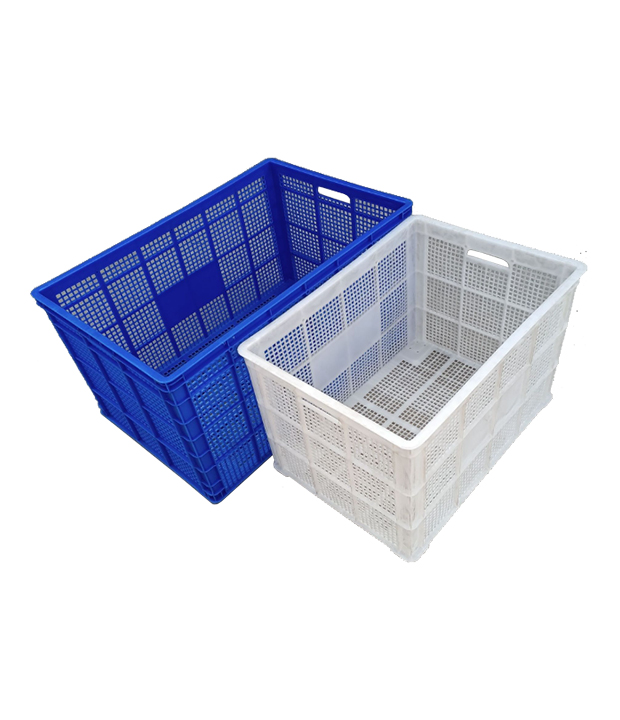
In industrial logistics systems, structural design directly influences storage density, transportation efficiency, and handling safety. Plastic Storage Containers must support heavy loads while remaining lightweight enough to facilitate manual or automated handling. Our structural engineering approach focuses on optimizing wall thickness, rib reinforcement, and geometric stability to maximize load-bearing capacity without unnecessary material consumption. Stackability plays a central role in warehouse optimization. We require Plastic Storage Containers that maintain structural integrity when stacked over extended periods. Proper load distribution prevents container collapse, protects stored products, and ensures safe working conditions for personnel. Through precision molding and structural reinforcement, we achieve containers that support vertical stacking while preserving shape accuracy. Compatibility with pallets, racks, and shelving systems further defines container design requirements. Plastic Storage Containers must integrate seamlessly into standardized logistics infrastructures. Our designs align with global pallet dimensions and automated storage systems, allowing efficient use of warehouse space and streamlined material flow. Ergonomic considerations also influence container structure. Handles, grip zones, and edge reinforcement improve handling efficiency and reduce worker fatigue. In high-frequency logistics environments, such design features contribute significantly to productivity and workplace safety.
Supply chain efficiency depends on the smooth interaction between production, storage, transportation, and distribution. Plastic Storage Containers act as a unifying element that connects these stages. By standardizing container dimensions, materials, and handling characteristics, we reduce complexity across logistics networks. Standardized Plastic Storage Containers allow faster loading and unloading, simplified inventory tracking, and improved compatibility with automated sorting and conveyor systems. We benefit from predictable container behavior, which supports accurate logistics planning and scheduling. Damage reduction represents another key contribution to supply chain efficiency. Protective foam structures absorb shocks and vibrations during transit, reducing product loss and minimizing rework or replacement costs. When we protect goods effectively, we improve customer satisfaction and strengthen long-term business relationships. Plastic Storage Containers also support reverse logistics and returnable packaging systems. Durable materials enable repeated use cycles, allowing us to implement closed-loop logistics models that reduce packaging waste and long-term costs.
Modern logistics increasingly relies on automation, robotics, and data-driven management. Plastic Storage Containers must therefore integrate seamlessly with automated storage and retrieval systems, robotic picking solutions, and conveyor networks. Our container designs prioritize dimensional precision and consistent weight distribution to support reliable automation performance. Sensors, barcodes, and RFID tags can be integrated into Plastic Storage Containers to enable real-time tracking and inventory management. Such integration enhances visibility across supply chains and supports data-driven decision-making. We gain improved control over material flow, stock levels, and order fulfillment accuracy. Automation compatibility also extends to container durability under repetitive mechanical handling. Robotic systems operate continuously, subjecting containers to repeated gripping, lifting, and movement cycles. Plastic Storage Containers with reinforced edges and impact-resistant materials maintain performance under such conditions, reducing system downtime and maintenance costs.
In heavy industry and manufacturing sectors, Plastic Storage Containers support the movement and storage of components, subassemblies, and finished products. Our containers must accommodate diverse shapes, weights, and surface sensitivities. Foam-based inserts and custom internal structures allow secure positioning of industrial components, preventing movement and surface damage. Manufacturing logistics often require just-in-time delivery and precise sequencing of components. Plastic Storage Containers enable organized storage and rapid access to parts, supporting lean manufacturing principles. By reducing search time and handling complexity, we enhance production efficiency. Chemical resistance represents another critical requirement in certain manufacturing environments. Plastic materials resist corrosion from oils, lubricants, and industrial chemicals, ensuring container longevity and maintaining clean storage conditions.
Transportation represents one of the most demanding stages for Plastic Storage Containers. Containers must withstand vibration, compression, and environmental exposure during road, rail, sea, and air transport. Foam-based structures provide cushioning that protects goods throughout long-distance shipping cycles. In export logistics, compliance with international packaging standards becomes essential. Plastic Storage Containers offer consistent quality and standardized performance that supports regulatory compliance across global markets. Our containers simplify customs inspection processes and reduce the risk of shipment rejection. Weight optimization further enhances transportation efficiency. Lightweight Plastic Storage Containers reduce overall shipment weight, lowering transportation costs and fuel consumption. This advantage proves particularly valuable in air freight and long-haul shipping operations.
Warehousing operations depend heavily on efficient storage solutions. Plastic Storage Containers support systematic organization, space optimization, and inventory accuracy. Uniform container dimensions allow efficient rack utilization and simplify warehouse layout planning. Transparency and labeling options enhance visibility and identification of stored goods. We benefit from faster picking, reduced errors, and improved inventory turnover. Plastic Storage Containers also facilitate FIFO and batch management practices, supporting quality control and traceability. Hygiene and cleanliness represent additional advantages in warehousing environments. Plastic surfaces are easy to clean and disinfect, supporting compliance with safety and quality standards across industrial sectors.
While initial acquisition cost remains a consideration, lifecycle cost efficiency ultimately defines container value in industrial logistics. Plastic Storage Containers deliver long service life due to resistance to corrosion, moisture, and mechanical wear. Our repeated-use capability reduces replacement frequency and lowers long-term operational expenses. Repair and maintenance requirements remain minimal compared to alternative materials. Even under intensive use conditions, plastic containers retain functional performance, contributing to predictable budgeting and cost control. Returnable packaging systems further enhance lifecycle efficiency. Durable Plastic Storage Containers support multiple logistics cycles, enabling sustainable supply chain practices and reducing disposable packaging dependence.
Environmental responsibility has become an integral part of industrial logistics strategy. Plastic Storage Containers contribute to sustainability through reusability, material efficiency, and reduced waste generation. Foam materials allow lightweight construction without sacrificing performance, lowering transportation-related emissions. Recyclability and material optimization support circular economy models. By extending container service life and enabling recycling at end-of-life stages, we align logistics operations with global sustainability goals. Closed-loop logistics systems using returnable Plastic Storage Containers further reduce packaging waste and environmental impact. Such systems strengthen corporate responsibility initiatives while delivering tangible cost benefits.
Industrial logistics encompasses diverse sectors, each with unique storage and transportation requirements. Plastic Storage Containers offer extensive customization potential to address specific operational challenges. Size, shape, internal structure, and material composition can be tailored to application needs. Custom inserts, partitions, and protective layers enhance product security and handling efficiency. For specialized components, we design containers that ensure precise positioning and damage prevention. Branding and identification options support supply chain visibility and asset management. Customized markings and color coding simplify sorting, tracking, and inventory control across complex logistics networks.
Safety remains a core priority in industrial logistics environments. Plastic Storage Containers contribute to risk reduction by providing stable stacking, secure handling features, and predictable performance. Lightweight construction reduces injury risk during manual handling, while reinforced structures prevent container collapse. Non-conductive plastic materials enhance safety in electrical and sensitive industrial environments. Smooth surfaces and rounded edges further reduce workplace hazards. By improving organization and reducing clutter, Plastic Storage Containers support safer warehouse layouts and clearer operational workflows.



 English
 中文简体
中文简体 Español