

 English
 中文简体
中文简体 Español
EPS Underfloor Heating Panel: A Comprehensive Guide to Insulated Floor Heating Systems
Understanding EPS Underfloor Heating Panels: Construction and Performance
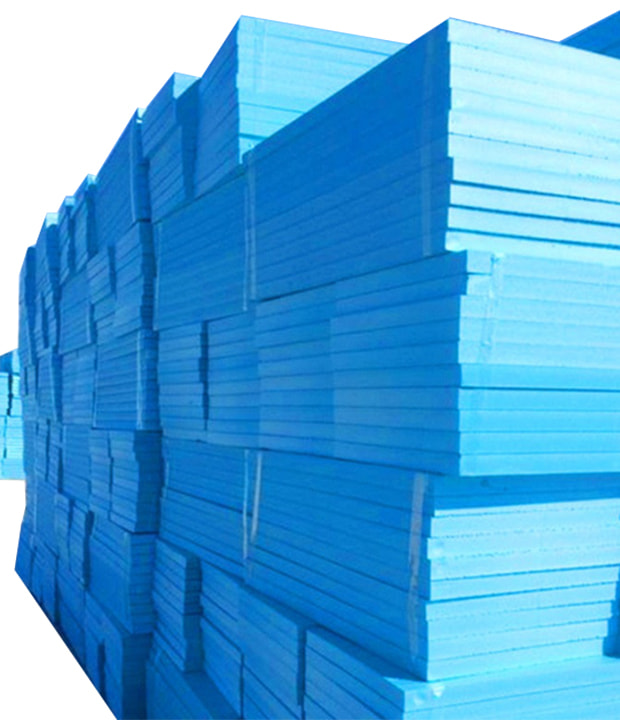
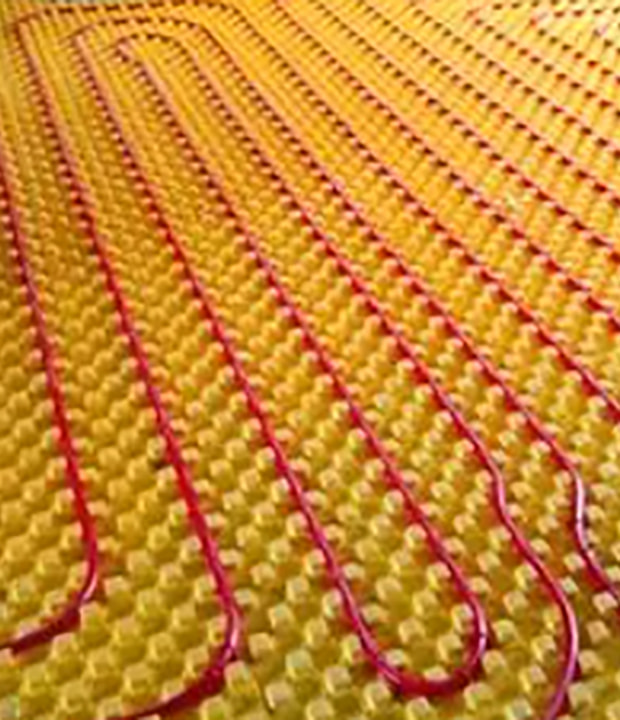
An EPS underfloor heating panel is a precision-engineered insulation board manufactured from expanded polystyrene (EPS), featuring pre-formed channels or dimples that securely hold heating pipes in place. The panels serve a dual purpose: they provide a thermal break between the heated floor and the subfloor below, while also serving as a stable mounting surface for the pipe network.
The thermal performance of an EPS underfloor heating panel is characterized by its lambda value (thermal conductivity), typically ranging from 0.032 to 0.038 W/mK. This low thermal conductivity ensures that heat generated by the system is directed upward into the living space rather than downward into the ground or basement. A 20mm thick EPS panel can achieve U-values below 1.5 W/m²K, while 50mm panels deliver U-values below 0.8 W/m²K, meeting or exceeding most building code requirements for floor insulation.
EPS Underfloor Heating Panel vs. Alternative Insulation Systems
The following table compares EPS underfloor heating panel systems against alternative insulation methods commonly used in radiant floor heating installations.
| Parameter | EPS Underfloor Heating Panel | Extruded Polystyrene (XPS) | Polyurethane (PUR/PIR) | Mineral Wool |
| Thermal Conductivity (W/mK) | 0.032-0.038 | 0.028-0.035 | 0.022-0.028 | 0.035-0.045 |
| Compressive Strength (kPa) | 100-250 | 150-500 | 120-300 | 20-50 |
| Water Absorption (%) | 1-4 | 0.3-1.5 | 1-3 | High |
| Pipe Retention System | Pre-formed channels | Requires clips or staples | Requires clips or staples | Requires clips or staples |
| Relative Cost | Moderate | High | Very High | Low |
| Installation Speed | Fast (pre-formed channels) | Moderate | Moderate | Slow |
| Typical Thickness (mm) | 20-50 | 25-60 | 20-40 | 40-80 |
Installing EPS Underfloor Heating Panels: A Step-by-Step Overview
The installation of EPS underfloor heating panels is significantly faster than traditional wet-system installations. The typical workflow for a professional installation follows these stages:
- Subfloor Preparation: The existing subfloor must be clean, level, and free from debris. EPS panels can be installed directly over concrete, timber, or existing floor coverings, provided the surface is flat to within 5mm over a 3-meter span.
- Panel Layout: EPS underfloor heating panels are laid in a staggered brickwork pattern to minimize thermal bridging at joints. The panels interlock via tongue-and-groove or step-edge connections, creating a continuous insulation layer.
- Pipe Installation: Heating pipes are pressed into the pre-formed channels of the EPS underfloor heating panel. The channels securely grip the pipe without the need for additional clips or fasteners, reducing installation time by 40-50% compared to traditional systems.
- System Pressure Testing: Before applying the final floor covering, the pipe network must be pressure tested to ensure integrity. The system should be pressurized to 2-3 times the normal operating pressure for a minimum of 24 hours.
- Floor Covering Installation: The final floor finish can be applied directly over the EPS underfloor heating panel. Most manufacturers recommend a screed or self-leveling compound overlay to provide a smooth surface for tiles, wood, or carpet installations.
Fast Installation
Pre-formed pipe channels eliminate the need for clips, staples, or brackets. A typical 100m² installation can be completed in 4-6 hours by a two-person team.
Superior Thermal Performance
Low thermal conductivity ensures that 90-95% of heat generated by the system is directed upward into the living space. This reduces heating costs by 30-50% compared to uninsulated systems.
Lightweight Construction
EPS panels weigh only 15-25 kg/m³, making them easy to transport and handle. This reduces structural loading compared to traditional wet-system insulation.
Thermal Efficiency: How EPS Underfloor Heating Panels Reduce Energy Consumption
The energy efficiency of an EPS underfloor heating panel is determined by the thermal resistance (R-value) it provides. For a typical 30mm EPS panel with a lambda of 0.035 W/mK, the R-value is approximately 0.86 m²K/W. A 50mm panel doubles this to 1.43 m²K/W.
In practical terms, this means that an EPS underfloor heating panel prevents significant heat loss through the floor structure. A study conducted on a 150m² residential installation demonstrated that using 30mm EPS panels reduced heat loss to the subfloor by 78% compared to an uninsulated installation. This translated to annual energy savings of approximately 2,500 kWh for a gas-fired system operating at 60% efficiency, representing a saving of $300-$400 per year at current energy prices.
For high-value customers, the thermal performance of EPS underfloor heating panels also enables lower flow temperatures in the heating circuit. Lower flow temperatures increase the efficiency of heat pumps and condensing boilers, further reducing operating costs by 10-15%.
Load-Bearing Capacity of EPS Underfloor Heating Panels
A critical consideration for any floor installation is the ability to support the intended floor loads. EPS underfloor heating panels are available in several compressive strength grades, typically ranging from 100 kPa to 250 kPa (10-25 tons per square meter).
- 100-150 kPa (Type I): Suitable for residential applications with carpet, tile, or wood flooring. These panels support typical domestic loads of 3-5 kN/m².
- 200-250 kPa (Type II): Recommended for commercial and light industrial applications where higher load-bearing capacity is required, such as retail spaces, showrooms, or garages.
- 300 kPa and above: Specialized high-density EPS underfloor heating panels are available for heavy-duty applications including workshops, warehouses, and loading bays.
It is essential to select the appropriate compressive strength for the intended application. Underspecifying can lead to compression or deformation of the panels under load, which may damage the heating pipes and reduce system performance.
Moisture Resistance and Long-Term Durability of EPS Panels
The closed-cell structure of EPS gives EPS underfloor heating panels excellent moisture resistance. Water absorption rates for standard EPS typically range from 1-4% by volume, significantly lower than many alternative insulation materials.
This low water absorption ensures that the thermal performance of the EPS underfloor heating panel remains stable over its service life. Even in humid conditions or in the presence of minor water ingress (such as pipe leaks), the panels maintain their structural integrity and insulation properties. However, for installations in areas with high groundwater levels or flood risk, additional waterproofing measures such as a polyethylene vapor barrier should be installed beneath the panels.
The service life of EPS underfloor heating panels exceeds 50 years under normal building conditions. The material does not degrade, rot, or support mold growth, making it a hygienic choice for floor insulation. Panel dimensions remain stable within a temperature range of -40C to +90C, well within the operating parameters of underfloor heating systems.
Critical insight for building professionals: When specifying an EPS underfloor heating panel, consider the thermal bridging at the panel edges. The use of tongue-and-groove panel connections or thermal break strips at the wall junctions can further reduce heat loss by up to 15%, maximizing the energy efficiency of the entire system.
EPS Underfloor Heating Panel vs. XPS: A Detailed Comparison
While both EPS and XPS are polystyrene-based insulation materials, significant differences exist between EPS underfloor heating panels and XPS alternatives.
- Manufacturing Process: EPS is produced by expanding polystyrene beads, while XPS is extruded from molten polymer into a continuous sheet. This fundamental difference gives XPS a slightly lower thermal conductivity and higher compressive strength.
- Environmental Impact: EPS underfloor heating panels have a lower environmental footprint than XPS. EPS is produced with less energy, contains no HCFCs or CFCs, and is fully recyclable. XPS was traditionally manufactured using HCFC blowing agents, although many manufacturers have transitioned to lower-GWP alternatives.
- Cost Considerations: EPS panels are typically 20-30% less expensive than XPS equivalents for the same insulation thickness. For most residential and commercial projects, EPS provides a more cost-effective solution without compromising thermal performance.
- Installation Factors: EPS underfloor heating panels with pre-formed pipe channels are available as a complete system, eliminating the separate channel-cutting step required with XPS panels. This reduces installation time and labor costs.
Cost Analysis: The Value Proposition of EPS Underfloor Heating Panels
For building owners and project developers, the cost-effectiveness of EPS underfloor heating panels is a critical factor in the decision-making process. A detailed cost analysis for a typical 200m² residential installation reveals the following:
- Material Cost: EPS underfloor heating panels at $12-$18 per m² (30mm thickness). Total material cost: $2,400-$3,600.
- Installation Labor: Two-person team, 8 hours at $75/hour: $1,200.
- Pipe Materials: 1,500 meters of PEX pipe at $1.20/m: $1,800.
- Total Installed Cost: $5,400-$6,600 for the underfloor heating system including the EPS panels, pipes, and manifold.
The annual heating cost savings compared to conventional radiator systems typically range from $400 to $800 per year, depending on fuel type and climate. This means that the EPS underfloor heating panel system pays for itself within 7-12 years. When combined with a heat pump or condensing boiler, the payback period can be reduced to 4-8 years.
EPS Underfloor Heating Panels and Heat Pump Compatibility
The growing adoption of heat pump technology has increased interest in EPS underfloor heating panels. Heat pumps operate most efficiently when delivering water at lower temperatures (typically 35-45C), which aligns perfectly with underfloor heating systems.
EPS underfloor heating panels contribute to heat pump efficiency in two ways. First, the superior insulation reduces the overall heat load of the building, allowing the use of a smaller and less expensive heat pump. Second, the ability to use lower flow temperatures directly improves the coefficient of performance (COP) of the heat pump. For every 1C reduction in flow temperature, heat pump COP increases by approximately 2-3%. When using an EPS underfloor heating panel compared to a conventional radiator system, the flow temperature can be reduced by 10-15C, improving COP by 20-45%.
Design Flexibility: Modular EPS Underfloor Heating Panels
Modern EPS underfloor heating panels are manufactured as modular components that can be configured to suit virtually any floor plan. Standard panel sizes include 600mm x 1000mm, 600mm x 1200mm, and 600mm x 2000mm, with thicknesses ranging from 20mm to 60mm.
Pre-formed channel patterns are available in multiple configurations: serpentine, twin-tube, and spiral patterns to accommodate different pipe spacing requirements. Some EPS underfloor heating panels feature a dimpled surface that allows random pipe routing, offering maximum design flexibility. For complex room shapes or areas with multiple zones, customized panel layouts can be ordered directly from the manufacturer.
The low thermal mass of EPS underfloor heating panels also contributes to faster system response times. Compared to wet-system concrete floors, which may take hours to reach operating temperature, EPS panel systems respond within 30-60 minutes, enabling more precise temperature control and lower energy consumption during setback periods.